
The Importance of High-Visibility and Safety Apparel: OSHA Standards and Real-World Impact

Abstract
High-visibility and safety apparel, including OSHA-approved safety vests, t-shirts, and jackets, play a huge role in workplace safety across various industries. This paper takes a closer look at the standards governing high-visibility clothing, the tech advances in this area, and the real-world impact these garments have had on reducing workplace accidents. By including case studies and stats, this research shows why sticking to OSHA rules and investing in quality safety apparel is so important.

Custom Safety TShirts, Vests, Jackets for your Business
Introduction
In a lot of industries, visibility isn’t just a nice-to-have; it’s a must for worker safety. From construction zones to roadside maintenance crews, employees face big risks from moving vehicles and heavy machinery. The Occupational Safety and Health Administration (OSHA) has laid out guidelines to make sure high-visibility and safety apparel is used to cut down on these risks. High-visibility clothing—think fluorescent fabrics and retroreflective strips—makes workers stand out in all kinds of lighting, improving their safety and lowering accident rates.
At Accent T-Shirts, we provide a full range of high-visibility safety gear, including t-shirts, jackets, and vests that meet OSHA and ANSI standards. Whether you need apparel for your construction crew or roadside team, we’ve got you covered with durable, compliant solutions.
This paper digs into how safety apparel has evolved, the standards OSHA and the American National Standards Institute (ANSI) have set, and the measurable impact of using these garments at work.
OSHA Standards for High-Visibility Clothing
OSHA Guidelines
OSHA’s requirements for high-visibility clothing mostly apply to industries where workers deal with vehicles or equipment. OSHA’s guidelines come from ANSI/ISEA 107, the standard that breaks high-visibility safety apparel into three classes:
Class 1: For workers in low-risk environments (e.g., parking attendants).
Class 2: For environments with higher risks (e.g., construction zones).
Class 3: For the highest-risk areas, needing full-body visibility (e.g., highway workers).
Compliance and Consequences
If a company doesn’t follow OSHA’s high-visibility clothing rules, it can lead to serious fines and, worse, more accidents. Employers are required to provide proper safety apparel at no cost to their workers, ensuring the garments meet ANSI standards.
NEED A QUOTE FOR SAFETY GEAR?
Accent T-Shirts has you covered! 702-866-8888
The Science of High-Visibility Apparel
Materials and Technology
High-visibility clothing relies on two main things:
Fluorescent Fabrics: Great for daytime, they work by absorbing and reflecting ultraviolet light.
Retroreflective Strips: These shine light back to its source, making them essential for nighttime visibility.
Advances in fabric tech have led to durable, lightweight, and breathable high-visibility gear that holds up after many washes.
Case Studies
Case Study 1: Construction Zone Safety
A study by the National Institute for Occupational Safety and Health (NIOSH) looked at accident rates in construction zones before and after mandatory high-visibility apparel was introduced. Results showed a 25% drop in worker injuries related to vehicle strikes after adding ANSI Class 2 and 3 vests.
Case Study 2: Roadside Maintenance
The Florida Department of Transportation did a multi-year study on high-visibility clothing and roadside workers. After adopting Class 3 safety jackets, worker deaths fell by 18% over three years, proving how effective these garments can be.
Case Study 3: Warehousing and Logistics
A big logistics company in California gave its warehouse workers high-visibility t-shirts and jackets. An audit found a 30% decrease in accidents involving forklifts, showing the value of high-visibility gear even indoors.
Economic and Productivity Benefits
Reduced Workplace Accidents
The costs of workplace accidents—medical bills, insurance hikes, lost productivity—can add up fast. High-visibility apparel helps avoid these costs by preventing accidents in the first place.
Enhanced Worker Confidence
Safety apparel doesn’t just protect workers; it gives them peace of mind. When workers feel safer, they’re more productive and satisfied with their jobs.
Challenges and Considerations
Maintenance and Durability
Making sure safety apparel stays effective over time is key. Employers need to check regularly and replace gear that doesn’t meet ANSI standards anymore.
Compliance Costs
While buying high-visibility apparel is a big upfront cost, especially for smaller companies, the long-term savings from fewer accidents usually makes it worth it.
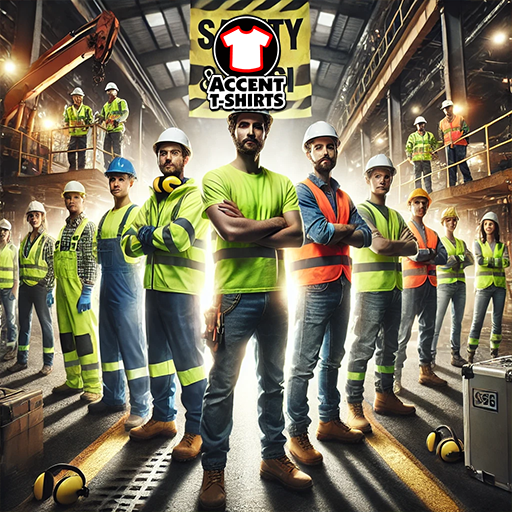
Custom Printed Safety Vests by Accent T-Shirts
Conclusion
High-visibility and safety apparel have become a must-have in industries where being seen can save lives. OSHA’s rules, along with new tech in textiles, have made a big difference in keeping workers safe. Case studies repeatedly show how high-visibility clothing cuts accidents and boosts confidence among workers.
At Accent T-Shirts, we are proud to offer OSHA-compliant safety gear that meets ANSI standards. Our high-visibility vests, t-shirts, and jackets are not only durable but also customizable to fit your brand’s needs. Protect your team and boost your workplace safety with solutions designed for the toughest environments.
Employers should make safety a priority by following the rules and investing in durable, high-quality gear. Doing so not only protects their teams but also creates a culture of safety and productivity.
References
Occupational Safety and Health Administration. (2025). “High-Visibility Clothing Standards.” Retrieved from OSHA.gov.
American National Standards Institute. (2025). “ANSI/ISEA 107-2020: High-Visibility Safety Apparel.”
National Institute for Occupational Safety and Health. (2024). “Impact of High-Visibility Clothing on Construction Zone Safety.” Journal of Safety Research.
Florida Department of Transportation. (2023). “Roadside Worker Safety Study.”
Logistics Today. (2024). “The Role of Safety Apparel in Warehousing Efficiency.”
Written by Lindy Williams