
Plastisol Ink in Screen Printing: How It's Made, Cured, and Why It Dominates the Industry
Introduction
If you've ever wondered how custom t-shirt designs stay so vibrant and long-lasting, the secret often lies in the ink. Plastisol ink is the go-to choice for most professional screen printers because of its exceptional durability and bold color output. At AccentTShirts.com, a trusted screen printer in Las Vegas, we use plastisol inks extensively to ensure our clients' designs look great wear after wear. In this article, we'll dive into what plastisol ink is, how it's made, how it cures during the screen printing process, and why its performance on garments is second to none. We'll also compare plastisol with other inks and share insights from our experience as Las Vegas screen printing experts.
What is Plastisol Ink and How Is It Made?
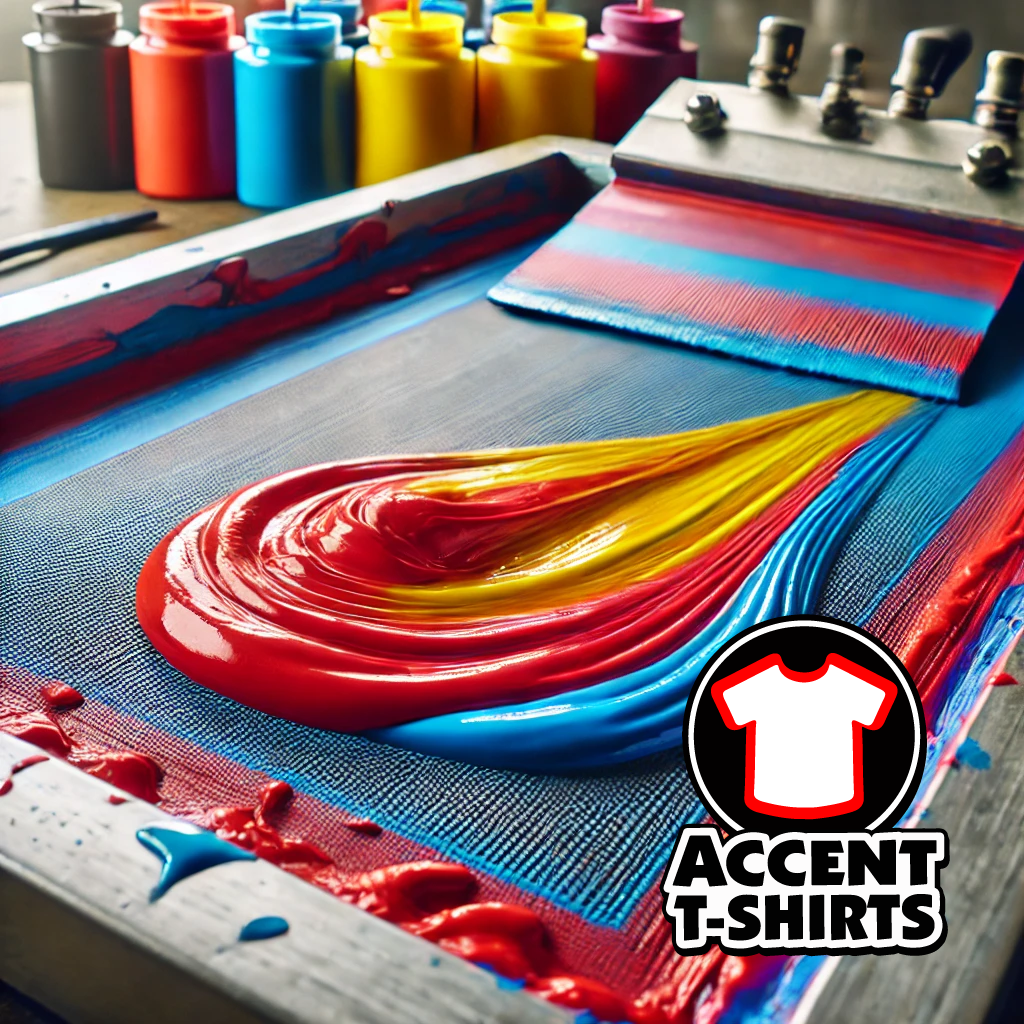
Plastisol ink is a specialized ink used in screen printing that essentially contains liquid plastic. In technical terms, it's a suspension of PVC (polyvinyl chloride) resin particles in a liquid plasticizer. The PVC resin is a fine powder, and the plasticizer is a clear, thick liquid. When combined, these components form a thick ink with a pudding-like consistency. Pigments are then added to give the ink its color, along with other additives (like stabilizers or thickeners) to fine-tune its properties.
One of the remarkable traits of plastisol ink is that it does not dry or cure at room temperature. Unlike water-based inks which can air-dry, plastisol remains wet and workable indefinitely until exposed to high heat. This means a screen printer can take their time during printing without the ink drying in the screen – a huge advantage for complex or large print runs. Manufacturers offer plastisol in a wide range of premixed colors, and custom shades can be created by mixing inks (similar to mixing paint). The result is a versatile, shelf-stable ink that is ready to use for printing on garments whenever you need it.
Key Characteristics of Plastisol Ink:
- Thick and Opaque: Plastisol lays on top of the fabric rather than soaking in. This creates very opaque prints, which is ideal for printing light colors on dark garments because the design stays bright and vivid.
- Vibrant Colors: Because it sits on the surface, plastisol ink produces rich, true-to-design colors. Even on black or colored shirts, the hues remain bold and eye-catching.
- Versatile Usage: It adheres well to most textile materials (cotton, polyester blends, etc.), as long as they can handle the heat needed for curing. It's commonly used on t-shirts, hoodies, jerseys, tote bags, and more.
These properties are why plastisol became the industry standard for garment screen printing. It's user-friendly for printers and produces consistently excellent results. At AccentTShirts.com, we rely on plastisol for the majority of our projects because it allows us to deliver the high quality our customers expect.
How Plastisol Ink Cures During the Screen Printing Process
Printing with plastisol ink involves a critical step after the ink is applied to the garment: curing. Curing is the process of using heat to transform the ink from a wet layer into a solid, durable print. After a design is screen printed with plastisol, the ink sits on the fabric as a liquid. To make that print permanent, the garment must be exposed to high heat, typically using a conveyor dryer (essentially a big oven for shirts) or a heat press.
The Curing Process: Plastisol ink generally needs to reach around 320°F (160°C) to fully cure. At this temperature, the PVC resin and the plasticizer in the ink fuse together. You can think of it like baking a cake – the heat causes a change in state. The once-liquid ink becomes a flexible solid, bonding onto the fibers of the garment. In a production setting, printed shirts run through a conveyor dryer that keeps them at the target temperature for about a minute. It's crucial that the entire ink layer reaches the cure temperature; if it's undercured (not fully fused), the print might crack or wash off later. On the other hand, overheating can scorch the fabric or overly dry out the ink, so precision is key.
For multi-color designs, printers often use a flash dryer between colors. A flash cure is a quick partial cure that gels the surface of the first color so a second color can be printed on top without smearing. Once all the colors are in place, the garment goes through a full cure in the dryer to set the entire design. At AccentTShirts.com, we carefully control our curing process for every print. Our team uses calibrated equipment and checks temperatures to ensure each print is cured perfectly. This attention to detail means that every custom shirt we produce in our Las Vegas shop has a design built to last.
Durability and Performance of Plastisol Ink on Garments
One of the biggest reasons plastisol ink is the backbone of the screen printing industry is its outstanding durability. Once properly cured, a plastisol print is extremely tough and long-lasting. In fact, a well-executed plastisol print often lasts the entire life of the garment. Here are a few of the performance benefits you get with plastisol:
- Wash Resistance: Plastisol prints hold up wash after wash. The colors stay vivid because the pigments are locked into that solid plastic layer. Unlike some inks that might fade significantly, plastisol-printed designs remain bright even after dozens of laundry cycles.
- Crack Resistance: A properly cured plastisol print flexes with the fabric, which helps prevent cracking or peeling. (Think of vintage band tees from decades ago – many plastisol prints on them are still going strong.) If cracking does occur, it's usually due to improper curing or excessively thick ink, not an inherent flaw in the ink.
- Strong Adhesion: Plastisol ink grips onto the fabric fibers. It doesn't dye them, but rather wraps around them and stays put. You won't find plastisol designs flaking off; they're firmly attached to the garment. As long as the fabric itself remains intact, a plastisol print will generally stay in place without peeling.
From a wearer's perspective, plastisol ink does add a slight texture to the shirt. The print can feel a bit thicker or rubbery on the surface. Large prints can also feel a bit less breathable due to that plastic layer. However, modern techniques (like the right screen mesh or soft-hand additives) can make plastisol prints feel softer and lighter. Most people don't mind a bit of texture, considering the print looks sharp and lasts long. If a super-soft feel is the top priority, that's when water-based ink might be a better choice (more on that shortly).
At AccentTShirts.com, we've seen plastisol prints outlast the shirts they're on. We’ve printed team uniforms, work shirts, and event tees for clients all over Las Vegas, and plastisol ink ensures the logos and artwork on those items remain intact through the season and beyond. Our reputation as a reliable screen printer in Las Vegas is built on using trusted materials like plastisol that never let our customers down.
Plastisol vs. Other Types of Screen Printing Ink
While plastisol is the most widely used ink in screen printing, it's not the only option out there. The two other common ink types you might hear about are water-based inks and discharge inks. Here's how plastisol compares to them:
Water-Based Inks: These inks use water as the main liquid component. Unlike plastisol, which sits on top of the fabric, water-based inks soak into the fabric fibers. The big benefit is a very soft print feel – once the shirt is washed, you can hardly feel a water-based print at all. Water-based inks are also eco-friendlier in some ways (no PVC, and equipment can be cleaned with water). However, there are some challenges:
- Water-based inks need to fully dry or be heat-set to cure. If the ink isn't properly cured (i.e. if some water remains in the print), the design can fade or wash out sooner.
- They can dry in the screen during printing, especially in dry climates or on longer runs. This means printers have to work quickly or periodically re-wet the screens to avoid clogging, which can complicate the process.
- Lower opacity on dark garments. On a dark shirt, water-based inks might look muted unless a white base layer is used or a special discharge process is done. Plastisol, by contrast, provides bright coverage on dark fabric with ease.
- In terms of durability, a well-cured water-based print can last quite a long time, but generally plastisol prints hold their vibrancy longer over many washes. Water-based prints might gradually fade to a more vintage look over time.
Discharge Inks: Discharge ink is actually a type of water-based ink formulated for dark, 100% cotton garments. It works by removing (bleaching out) the dye of the fabric and replacing it with the desired ink pigment. The result is a print that feels as soft as the shirt itself because essentially the fabric in that area has been re-dyed rather than having an extra layer on top. The advantage of discharge printing is a soft, breathable design on dark shirts with no palpable ink layer. However, discharge only works on certain fabric types (usually high-cotton content) and the color outcome can sometimes be unpredictable. The process also requires precision and the use of chemical additives, which not every project or shop is set up for. By comparison, plastisol can be used on almost any fabric (cotton, blends, polyester with special formulations) and what you see is what you get in terms of color — it's very predictable and consistent.
Water-based and discharge inks have their place, especially when a soft feel or vintage look is desired (and we offer those methods for clients who want them). However, for most custom t-shirt printing in Las Vegas and beyond – where customers want bright, long-lasting prints – plastisol remains our ink of choice. In fact, at AccentTShirts.com we often guide customers through the pros and cons of each ink type. More often than not, plastisol ends up being the recommended solution because it checks all the boxes for quality, durability, and visual impact.
Why AccentTShirts.com Trusts Plastisol Ink
At AccentTShirts.com, quality is king. As a local screen printing company in Las Vegas, we've tested various ink types over the years. Plastisol continues to impress us (and our clients) in several ways:
- Reliable, Consistent Prints: We know that when we use plastisol, the finished print will closely match the intended design in color and detail. And because the ink won't dry on the screen mid-job, we can print large runs without delays for cleaning. This consistency means orders are completed on time and look exactly as expected.
- Customer Satisfaction & Durability: Customers often tell us their printed shirts still look great after countless washes. This longevity means happy clients who come back for more. Whether it's company uniforms or event tees, the durable prints reflect the quality we promise.
- Versatility for Diverse Projects: For a custom print shop like us, plastisol's versatility is a huge plus. There are special plastisol formulas for almost any scenario (from stretchy sportswear to dye-blocking for poly fabrics), so we can tackle all kinds of jobs without switching inks. One ink system covers most of our needs, keeping things efficient no matter the project.
In short, plastisol ink is a cornerstone of our screen printing service, and it's one of the key reasons AccentTShirts.com can deliver top-notch prints consistently. Our team’s expertise in using plastisol, combined with our dedication to customer satisfaction, ensures that every order meets our high standards.
Conclusion: Get Vibrant, Lasting Prints with AccentTShirts.com
Plastisol ink’s blend of vibrancy, durability, and versatility has made it the workhorse of screen printing. Now that you know how it's made and cured, it's easy to see why professional printers rely on it for quality results.
At AccentTShirts.com, we're passionate about using the best materials and methods to bring your designs to life. If you're looking for a screen printer near me in the Las Vegas area (or even if you're not local – we can ship orders), our team is ready to deliver high-quality custom apparel printing. As a leading screen printer in Las Vegas, we combine expert plastisol printing techniques with friendly, personalized service.
Ready to get started? Contact AccentTShirts.com today for a quote or to discuss your project. We'll make your vision a reality with prints that are vibrant and built to last. Whether you need one shirt or a thousand, our team treats your order with the utmost care. Discover why so many clients trust AccentTShirts.com for their custom t-shirt printing needs!
custom t-shirt printer Las Vegas

plastisol ink for screen printing